In Seattle in 2026 a powder room refresh usually costs $8,000 to $16,000. A full remodel of a hall bathroom is usually $18,000 to $35,000, and a primary bathroom with a new layout starts around $35,000 and can pass $65,000.
Where your project lands in that range depends mostly on two things: whether the toilet, shower or sink has to move, and what we find once the old bathroom is opened up.
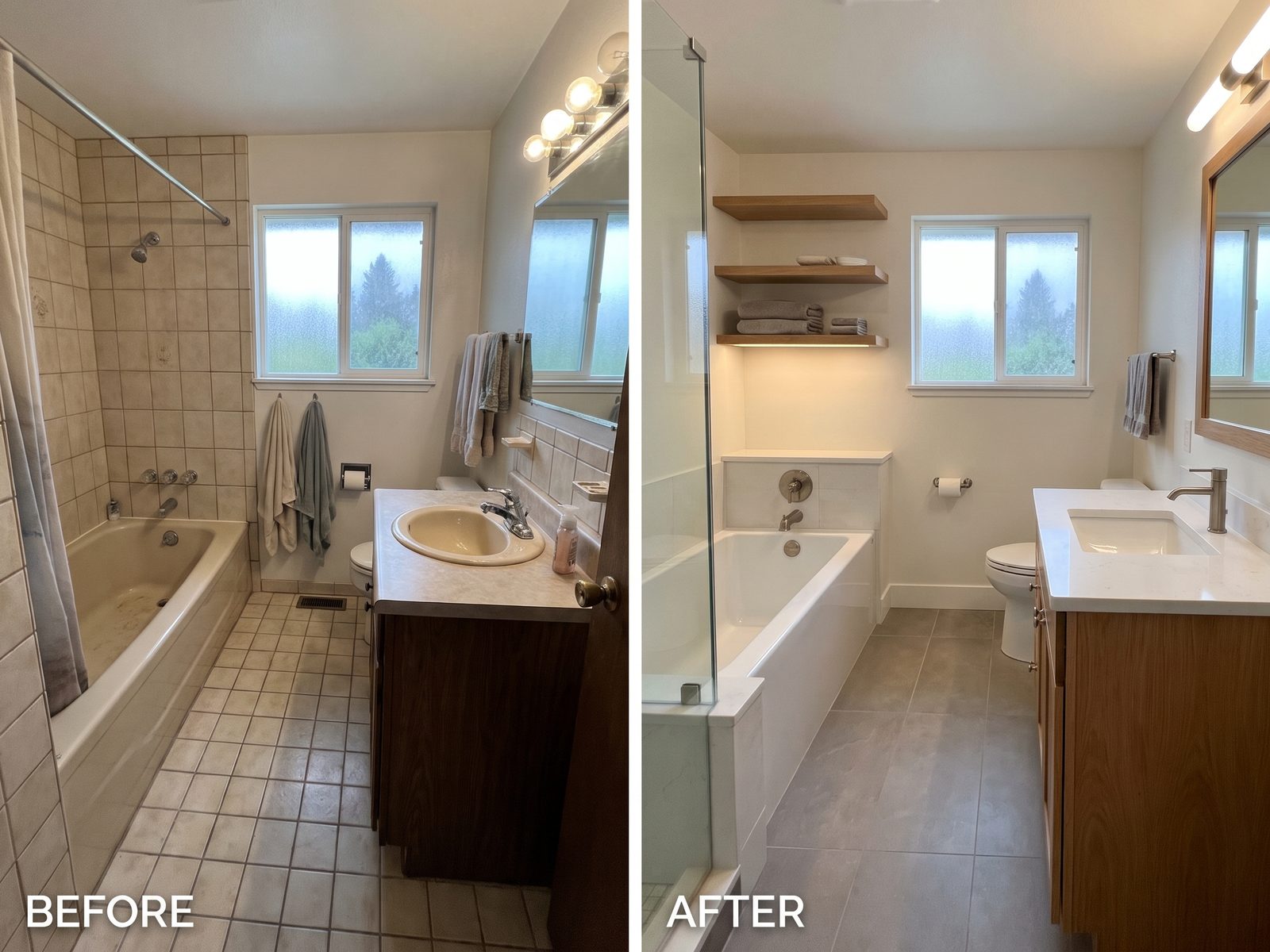
Typical prices
| Project | Typical range | What it usually covers |
|---|---|---|
| Cosmetic refresh | $8,000 - $15,000 | New vanity, toilet, faucet, mirror, lighting and paint. Plumbing stays put. |
| Powder room | $8,000 - $16,000 | Fixtures, flooring, wall finish, lighting. |
| Hall or guest bath, full remodel | $18,000 - $35,000 | Stripped to the studs. New shower or tub, waterproofing, tile, vanity, fan, electrical. |
| Primary bathroom | $35,000 - $65,000+ | Bigger room, walk-in shower, double vanity, often a new layout. |
Labor makes up about 40 to 45 percent of a bathroom budget here, and Seattle trade rates are well above the national average. That is why the "average bathroom cost" numbers you see in national articles usually look low to people who live here.
What pushes the price up
Moving plumbing
If the toilet, shower and sink stay where they are, you save more than with any other decision. Moving a toilet even a few feet means opening the floor, re-routing the drain and venting it to code. That move alone is often $700 to $1,500, and more on a slab or a second floor.
What is behind the walls
A large part of Seattle's houses were built before 1940, and many more before 1980. When we open an older bathroom we often find:
- rotted subfloor or framing around the toilet and tub after years of small leaks
- galvanized steel water pipes rusting from the inside
- old wiring that can't safely be extended for a new fan or outlet
- paint and materials old enough to need lead-safe or asbestos-safe handling
This is normal for the age of the housing here. In an older house, keep 10 to 15 percent of the budget in reserve, and work with a contractor who tells you about likely problems before demolition starts.
The shower
A tiled walk-in shower with a low or no curb, niches and a glass panel costs much more than a tub with a shower head. Good waterproofing behind the tile is the part you should never cut. It decides whether the shower lasts 25 years or starts leaking into the ceiling below after five.
Ventilation
Seattle bathrooms deal with moisture most of the year. Code requires the fan to vent outside, not into the attic. Adding or re-routing the duct doesn't cost much, and skipping it is how mold gets started.
Finishes
Tile, vanity and fixtures can move the budget by several thousand dollars. This is the part you have the most control over.
How long it takes
- Cosmetic refresh: about 1 to 2 weeks of work
- Full hall bath remodel: about 2 to 3 weeks of construction once materials are on site
- Primary bathroom with a new layout: about 6 to 10 weeks
Before construction you also need time for design, ordering materials (custom glass and vanities can take weeks) and permit review if the job needs it. Inside Seattle city limits, review can add several weeks, so build it into the plan.
Do you need a permit to remodel a bathroom in Seattle?
Bathroom work in Seattle can involve up to three different permits.
Building permit from SDCI. Usually not needed for surface work like painting or new finishes over existing walls. You do need one if the work touches load-bearing structure, changes the outside of the house (a new window, for example), or affects exits, light or ventilation. SDCI only exempts small repairs under a set dollar amount within six months, so a full gut remodel almost always needs a permit.
Plumbing permit. In Seattle these come from Public Health - Seattle & King County, not from SDCI. Adding, moving or replacing fixtures and re-routing pipes usually needs one.
Electrical permit from SDCI. Needed for new circuits, a new fan circuit, heated floors or moved outlets.
We check every scope against the current SDCI and Public Health requirements before giving a final price. If a contractor suggests skipping permits on a full remodel, think about who will answer for that work when you sell the house.
How to keep the budget under control
- Keep the layout if it works, and put the savings into the shower and waterproofing.
- Ask for a written estimate broken down line by line. A single number like "bathroom remodel, $28,000" doesn't tell you what you are paying for.
- Ask what happens if rot turns up, and what the likely repairs cost, before work starts.
- Order glass, vanities and special tile early.
- Look up the contractor's license on the Washington State L&I website before you sign anything, with us or anyone else.